
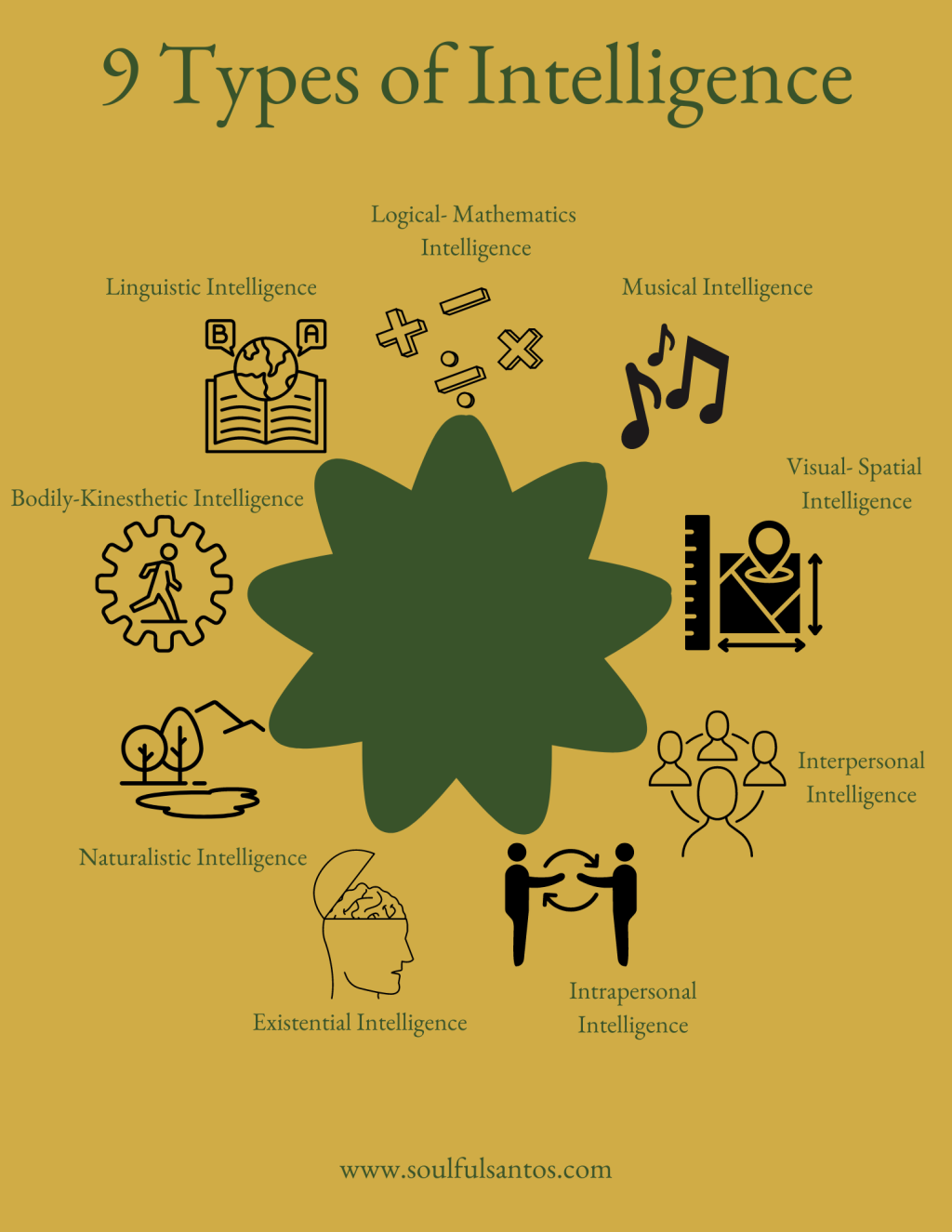
Human intelligence is a multifaceted and complex concept, encompassing a wide range of cognitive abilities and skills. The renowned psychologist Howard Gardner’s theory of multiple intelligences has revolutionized the way we understand and approach individual differences in learning and personal growth. This holistic approach recognizes that intelligence manifests in diverse ways, each contributing to our overall mental, physical, and spiritual development.
The mind is generally understood as the seat of thoughts, emotions, perceptions, and cognitive functioning. The body is referred as the human body, the vessel that God sees as your temple. Lastly, the spirit is “an animating or vital principle held to give life to physical organisms”. Being mindful about putting your mind, body, and spirit into different activities and functions, such as your intelligence and the activities that correspond with it, can result in a more fulfilling life.
Understanding Howard Gardner
Howard Gardner, an American developmental psychologist and professor at Harvard University, is best known for his groundbreaking theory of Multiple Intelligences, introduced in his 1983 book Frames of Mind: The Theory of Multiple Intelligences. Gardner’s work challenged the traditional view of intelligence, which often focused solely on logical and linguistic skills measured by IQ tests. He proposed that intelligence is multifaceted, encompassing a range of abilities beyond just cognitive skills, including interpersonal, intrapersonal, musical, spatial, bodily-kinesthetic, logical-mathematical, linguistic, naturalistic, and existential intelligence. This theory reshaped how educators and individuals understand human potential and recognize diverse talents, emphasizing the unique strengths each individual brings. Gardner’s insights have influenced teaching methods, learning environments, and even corporate training, encouraging a broader approach to skill development and personal growth.
Beyond Traditional IQ Measurements
The shift from relying solely on IQ tests to embracing a broader understanding of Interdisciplinary Education has transformed the way we evaluate and nurture individual potential. By recognizing the multifaceted nature of intelligence, educators and professionals can better tailor learning and development opportunities to individual strengths and preferences.
Incorporate Your Intelligence with the Human Trinity
In the groundbreaking work of psychologist Howard Gardner, we discover a remarkable understanding of the diverse ways in which individuals process information and engage with the world around them. Gardner’s nine types of intelligence shed light on the intricate connection between our mind, body, and spirit, offering a holistic approach to personal growth and development.
These nine intelligences, ranging from linguistic and logical-mathematical to bodily-kinesthetic and interpersonal, each play a vital role in shaping our unique strengths and weaknesses. By embracing this Holy Trinity of mind, body, and spirit, we can unlock our true potential and embark on a transformative journey of spiritual growth.
| Intelligence Type | Mind, Body, Spirit Connection |
|---|---|
| Linguistic | Mastery of language and communication, enhancing intellectual and spiritual expression. |
| Logical-Mathematical | Analytical and problem-solving skills, fostering mental discipline and strategic thinking. |
| Visual-Spatial | Intuitive understanding of spatial relationships, enabling creative visualization and problem-solving. |
| Musical | Sensitivity to rhythm, melody, and tone, connecting the mind and body through the power of sound. |
| Bodily-Kinesthetic | Mastery of physical movement and coordination, integrating the mind and body for optimal performance. |
| Interpersonal | Ability to understand and interact with others, nurturing emotional intelligence and social connection. |
| Intrapersonal | Self-awareness and introspection, cultivating spiritual growth and personal development. |
| Naturalistic | Sensitivity to the natural world, fostering a deeper connection with the environment and one’s place within it. |
| Existential | Ability to contemplate the fundamental questions of existence, transcending the boundaries of the physical and exploring the realm of the metaphysical. |
By embracing the strengths inherent in each of these intelligences, we can cultivate a harmonious balance between our mind, body, and spirit, unlocking our true potential for personal and spiritual growth.
Linguistic Intelligence: The Power of Words and Communication
At the heart of linguistic intelligence lies the mastery of language – the ability to effectively wield words, written or spoken, to convey ideas, evoke emotions, and forge meaningful connections. This type of Emotional Intelligence and Personal Growth is a hallmark of those who possess a deep understanding of the nuances of language and can harness its power to influence, inspire, and persuade.
Developing Language Skills
- Engage in regular reading to expand vocabulary and exposure to diverse writing styles
- Practice public speaking and hone presentation skills through professional development workshops or Toastmasters
- Explore creative writing by journaling, drafting short stories, or experimenting with poetry
- Learn a new language to broaden linguistic horizons and cultural understanding
Logical-Mathematical Intelligence: Reasoning and Problem-Solving
Logical-mathematical intelligence is a cognitive ability that enables individuals to excel in analytical thinking, problem-solving, and mathematical reasoning. This type of intelligence is often associated with a deep understanding of patterns, and relationships. Individuals with a strong logical-mathematical intelligence tend to thrive in careers that involve data analysis, scientific research, finance, engineering, and computer programming. These professionals possess the skills to break down complex problems, identify logical solutions, and apply mathematical principles to tackle diverse challenges.
Experts recommend the following strategies enhance your intelligence:
- Engage in mind-stimulating exercises, such as solving puzzles, playing chess, or participating in coding challenges, to sharpen critical-thinking and problem-solving skills.
- Regularly practice mental math and numeracy exercises to improve numerical fluency and pattern recognition.
- Explore analytical and strategic thinking through activities like strategic board games, logic-based video games, or coding projects.
- Seek out opportunities to apply logical reasoning in real-world scenarios, such as analyzing data, troubleshooting technical issues, or developing innovative solutions.
| Cognitive Abilities Enhanced | Careers Suited for Logical-Mathematical Intelligence |
|---|---|
| Analytical Thinking Numerical Reasoning Problem-Solving Deductive Reasoning Spatial Awareness | Accountant Data Analyst Computer Programmer Scientist Economist Mathematician Engineer |
By nurturing logical-mathematical intelligence through targeted exercises, problem-solving activities, and educational opportunities, individuals can unlock a powerful cognitive toolkit for navigating the complexities of the modern world and achieving success in a wide range of professions.
Visual-Spatial Intelligence: Understanding Through Images
Visual-spatial intelligence is the innate ability to visualize and manipulate objects in their minds. This uses images, shapes, and spatial relationships to have a better understanding of their surroundings. This spatial awareness fuels their creativity, enabling them to think outside the box and devise innovative solutions. From architects and designers to artists and engineers, those with this intelligence thrive in fields that demand a keen eye for detail and a talent for conceptualizing ideas in visual form.
Enhancing Visual Learning Skills
- Engage in activities that challenge your spatial reasoning, such as puzzles, origami, or building models.
- Explore visual note-taking techniques, like mind mapping or sketching, to aid in information retention and problem-solving.
- Immerse yourself in visual arts, such as painting, photography, or video editing, to cultivate your aesthetic sensibilities.
- Seek out learning environments that incorporate visual aids, interactive displays, and hands-on experiences to optimize your visual learning potential.
| Characteristic | Description | Potential Careers |
|---|---|---|
| Visual-Spatial Intelligence | The ability to perceive the visual-spatial world accurately, to perform transformations and modifications upon those perceptions, and to be able to re-create aspects of one’s visual experience without physical referents. | Architect, Interior Designer, Photographer, Animator, Graphic Designer, Sculptor, Pilot, Surgeon |
By nurturing our visual-spatial intelligence through intentional practice and exploration, we can unlock new realms of personal growth and holistic learning, empowering us to see the world in a more vivid, imaginative, and enriching way.
Ad: Affirmation Bible Verse Jar

Discover a new way to fill your life with positivity, love, and God’s word! The Affirmation Bible Verse Jar is designed to uplift, inspire, and help you stay centered in faith every day. Simply pull out a new verse each morning or whenever you need a pick-me-up, and let His word guide you through the day.
What’s Inside?
- Affirmations and blessings to help deepen your connection with God.
- A wonderful tool to support your spiritual journey, make daily devotion easy, and fill your heart with peace and joy.
- Have a constant reminders of God’s unwavering support and protection✨
Perfect as a gift or as a personal reminder to stay connected to God’s promises. Get yours today for $16.99 and start each day with a message from God!
Musical Intelligence: Rhythm, Harmony, and Sound Processing
Musical intelligence encompasses an individual’s capacity to perceive, appreciate, and express themselves through sound, rhythm, and harmony. From the soothing melodies that soothe the soul to the upbeat rhythms that energize the body, musical intelligence plays a pivotal role in our cognitive development and emotional well-being.
Individuals with a strong musical intelligence possess the ability to recognize, create, and manipulate musical patterns, often demonstrating a keen ear for pitch, tone, and melody. This innate talent can translate into a range of fulfilling career paths, from professional musicians and composers to music therapists and sound engineers.
Interestingly, studies have shown that the cultivation of musical intelligence can have a profound impact on Mind Development and Emotional Intelligence. Engaging in musical activities, such as playing an instrument or singing, has been linked to improved memory, language skills, and problem-solving abilities. Additionally, the emotional expression and stress-relieving properties of music can contribute to enhanced overall well-being and exercise of the mind and body.
“Music gives a soul to the universe, wings to the mind, flight to the imagination, and life to everything.” – Plato
To nurture and develop one’s musical intelligence, individuals can explore a variety of avenues, such as taking music lessons, participating in choir or band, or even engaging in casual music-making activities at home. By embracing the rhythmic, harmonic, and sound-processing capabilities of the mind, we can unlock a world of creative expression and personal growth.
| Characteristic | Description |
|---|---|
| Rhythm and Timing | Ability to recognize, create, and manipulate rhythmic patterns and tempos. |
| Pitch and Melody | Sensitivity to pitch, tone, and melodic structures, allowing for the perception and production of music. |
| Harmony and Accompaniment | Understanding of how different musical elements, such as chords and instruments, work together to create a harmonious whole. |
| Emotional Expression | Capacity to use music to express and evoke emotional responses, fostering deeper connections and self-understanding. |
Bodily-Kinesthetic Intelligence: Physical Learning and Movement
Bodily-kinesthetic intelligence is a unique and powerful type that encompasses the ability to use one’s body, movements, and physical skills for expression, problem-solving, and learning. This holistic approach to learning recognizes the intrinsic connection between the body and the mind, highlighting the strengths of individuals who thrive through physical engagement and hands-on experiences.
Movement-Based Learning Strategies
Individuals with a strong bodily-kinesthetic intelligence often excel in activities that involve coordinated movements, such as dance, sports, and hands-on crafts. By incorporating movement-based strategies into the learning process, these learners can tap into their natural strengths and enhance their overall understanding and retention of new concepts. Some effective techniques include:
- Role-playing and acting out scenarios
- Engaging in tactile and kinesthetic activities, such as building models or manipulating objects
- Incorporating physical movement, such as pacing or gesturing, during lessons or discussions
Athletic Intelligence Development
The bodily-kinesthetic intelligence is not limited to the realm of sports and physical activities; it can also translate to success in various professions that require exceptional physical skills, coordination, and dexterity. Careers such as surgery, engineering, and performing arts often benefit from individuals who possess a strong bodily-kinesthetic intelligence. By focusing on developing these physical skills and enhancing body awareness, learners can unlock their full potential and thrive in a wide range of holistic learning environments.
| Careers Benefiting from Bodily-Kinesthetic Intelligence | Key Skills Required |
|---|---|
| Surgeon | Precise hand-eye coordination, fine motor skills, spatial awareness |
| Dancer | Graceful movement, rhythm, physical expression |
| Carpenter | Dexterity, problem-solving, spatial reasoning |
Interpersonal Intelligence: Understanding Others
Interpersonal intelligence, the ability to understand and interact effectively with others, is a vital component of personal growth and emotional intelligence. This type of intelligence allows individuals to empathize, communicate, and collaborate in meaningful ways, fostering stronger relationships and enhancing one’s overall well-being.
Individuals with strong interpersonal intelligence possess a keen understanding of others’ emotions, motivations, and social cues. They excel at building rapport, resolving conflicts, and navigating complex social situations with ease. This invaluable skill set can lead to rewarding careers in fields such as counseling, teaching, human resources, and social work, where the ability to connect with and support others is paramount.
To nurture and develop interpersonal intelligence, one can practice active listening, enhance emotional self-awareness, and engage in empathy-building exercises. By cultivating these essential skills, individuals can deepen their personal relationships, improve their leadership abilities, and contribute positively to their communities.
| Characteristics of Interpersonal Intelligence | Careers Suited for Interpersonal Learners |
|---|---|
| Empathy and emotional understanding Effective communication and active listening Strong social skills and networking abilities Conflict resolution and mediation skills Collaborative and team-oriented approach | Counseling and Therapy Teaching and Education Human Resources and Recruitment Social Work and Community Development Sales and Customer Service |
By cultivating interpersonal intelligence, individuals can not only enhance their Emotional Intelligence and Self-awareness, but also foster meaningful Personal Growth in their personal and professional lives.
Intrapersonal Intelligence: Self-Understanding and Spiritual Growth
Intrapersonal intelligence, a crucial component of the nine types of intelligence, encompasses our ability to understand ourselves deeply and cultivate spiritual growth. This introspective intelligence allows us to tap into our inner world, fostering self-awareness, emotional regulation, and a stronger connection to our spiritual essence.
Self-Reflection Techniques
Developing intrapersonal intelligence begins with the practice of self-reflection. Engaging in activities such as journaling, meditation, and contemplative prayer can help us gain insights into our thoughts, feelings, and values. By taking the time to pause and explore our inner landscape, we can uncover hidden patterns, overcome limiting beliefs, and align our actions with our spiritual aspirations.
Emotional Intelligence Development
Intrapersonal intelligence is closely tied to emotional intelligence, the ability to recognize, understand, and manage our emotions effectively. By nurturing our emotional self-awareness, we can develop greater self-regulation, empathy, and the capacity to navigate the complexities of spiritual growth. Practices like mindfulness, emotional journaling, and seeking the guidance of a Christian counselor can all contribute to the cultivation of emotional intelligence.
The journey of self-understanding and spiritual growth is a lifelong process, but one that can lead to profound personal transformation and a deeper connection to the spiritual realm. By embracing our intrapersonal intelligence, we unlock the keys to unlocking our full potential and living a more spiritually fulfilling life.
Naturalistic Intelligence: Environmental Awareness
Naturalistic intelligence, as described by psychologist Howard Gardner, encompasses our ability to recognize, appreciate, and understand the natural world around us. This type of intelligence goes beyond simply identifying various plants and animals – it involves a deep connection and respect for the environment, along with the skills to classify, organize, and extract valuable insights from the natural landscape.
Individuals with strong naturalistic intelligence often excel in fields such as biology, ecology, agriculture, and environmental science, where their keen observational skills, pattern recognition, and understanding of interconnected systems are invaluable. They may find fulfillment in careers that allow them to work directly with nature, such as park rangers, wildlife conservationists, or sustainable farmers.
Work Cited
Merriam-Webster. (n.d.). Spirit. In Merriam-Webster.com dictionary. Retrieved November 14, 2024, from https://www.merriam-webster.com/dictionary/spirit
 Soulful Santos
Leave a comment